Bidirectional charging, particularly Vehicle-to-Grid (V2G), is ready for the market: vehicles, bidirectional chargers and backend systems have been tried and tested, and the first commercial applications are already operating successfully. However, if electric vehicles are to be used as mobile energy storage systems on a broad scale, the regulatory framework must also be fit for purpose.
For a long time, that was not the case in Germany. Laws and regulations prevented EV owners and the power grid from benefiting from the advantages of V2G.
The reason was that electricity charged from the grid into a vehicle battery and later fed back into the grid was effectively subject to multiple charges: grid fees, electricity tax and green energy levies (EEG levies). These charges applied both when the electricity was imported into the battery and when it was discharged, in other words: when the energy was fed back into the grid. This made V2G economically unattractive. Paradoxically, stationary battery storage systems were exempt from this double burden.
V2G Regulation in Germany: What Has Changed
Since the beginning of 2026, lawmakers and the Bundesnetzagentur (BNetzA), Germany’s energy regulator, have been working to place stationary and mobile energy storage systems on an equal regulatory footing. Four aspects are particularly relevant to V2G:
- Grid fees: An amendment to the Energiewirtschaftsgesetz (German Energy Industry Act; EnWG for short) eliminates the double charging of grid fees when electricity is imported from and fed back into the grid. In this respect, electric vehicles are finally treated like stationary storage systems. This change made V2G economically viable in Germany for the first time.
-
Electricity tax: The amended
Stromsteuergesetz (Electricity Tax Act) protects private vehicle
owners from what is known as the “supplier trap.” In other words,
participating in V2G does not legally turn them into electricity
suppliers—with the additional tax, documentation and billing obligations
that this would entail.
However, an exemption from electricity tax on electricity fed back into the grid is tied to self-generated solar power. Anyone who stores electricity from the grid in their vehicle battery must continue to pay electricity tax.
-
Market integration: The BNetzA’s determination on
the “market integration of storage systems and charging points” (Marktintegration von Speichern und Ladepunkten; MiSpeL for short) is intended to establish rules for
distinguishing, for accounting purposes, between different volumes of
electricity in storage systems and bidirectional charging points operated in
combination with other assets.
More specifically, the rules concern the distinction between electricity from renewable sources and electricity drawn from the public grid. This distinction is important because it allows an electric vehicle operating in V2G mode to take in electricity and feed it back into the grid later without automatically jeopardising the eligibility for support or potential levy exemptions associated with the renewable share of the electricity.
MiSpeL is scheduled to take effect on 1 October 2026. A transitional period is planned to run until 30 September 2027. During this period, the rules may only be applied with the agreement of the relevant distribution system operator and metering point operator.
-
The grid fee system: The
Allgemeine Netzentgeltsystematik Strom (General Electricity Grid
Fee System; AgNes for short) is intended to fundamentally reform
how grid fees are calculated from 2029 onwards. One planned change that is
particularly relevant to V2G concerns grid electricity fed back into the
network. It is intended to be exempt from usage-based grid fees, provided
that it can be clearly distinguished from other electricity flows through
appropriate metering. This could allow bidirectional charging points to be
treated similarly, for grid fee purposes, to stationary storage systems
coupled with a generation facility.
The final AgNes determination is expected to be issued by the end of 2026.
--
UPDATE as of October 1, 2026: In early August 2026, the Federal Network Agency published the current working draft of MiSpeL. While this draft pointed in the right direction in principle, its complex calculation rules would have significantly hindered the market ramp-up of V2G, as we highlighted in the original version of this article.
In a letter to the Federal Network Agency, The Mobility House Energy – alongside other representatives from the automotive and energy industries – appealed for the requirements for bidirectional charging to be simplified in the final determination to safeguard the technology's mass-market viability.
We are pleased that the Federal Network Agency took our criticism to heart and revised the regulatory framework in the final draft. The final MiSpeL determination includes changes addressing all of these points:
- Bidirectional charging points are now consistently treated like stationary storage.
- The single-meter path (Pauschaloption) has also been opened to households without their own solar installation, featuring optimized calculation rules. A second, expensive smart meter is no longer strictly required for basic V2G operation.
- The safety margin (indifference margin) for bidirectional charging points has been reduced from a factor of 0.5 to 0.2. The buffer zone remains in place as a safeguard against misuse, but it is no longer a business case killer.
Our demands were thus heard, and the framework has been adjusted so that bidirectional charging is becoming economically viable and mass-market ready in Germany.
--
[Below, we document our original text and the analysis from that time which led to these successful adjustments:]
Taken together, these four areas form the regulatory framework for V2G in Germany. Overall, the measures are moving in the right direction. However, the August working draft of MiSpeL posed major barriers to the large-scale rollout of V2G.
Why MiSpeL Was Initially Not Practical for V2G
The version of MiSpeL published in August 2026 overlooked the simplest and most important V2G use case for the mass market: households with an EV and a bidirectional charging point, but without a photovoltaic system or stationary home battery.
MiSpeL provides two ways of accounting for charging points when distinguishing between different volumes of electricity and determining eligibility for support and levy exemptions: the Abgrenzungsoption and the Pauschaloption.
Abgrenzungsoption: Precise but Costly Delineation
The Abgrenzungsoption (delineation option) treats charging points in the same way as stationary battery storage systems: the electricity charged and the energy fed back into the grid are attributed to the charging point.
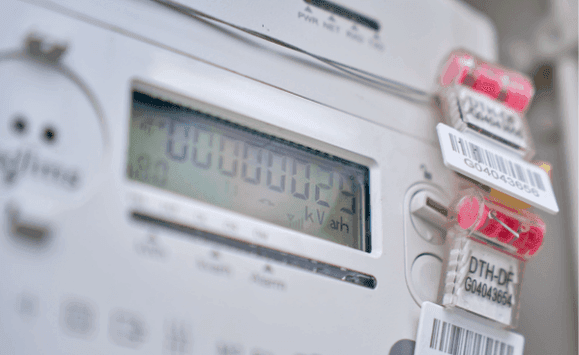
The basic approach makes sense. In practice, however, it requires an accurate record of how much electricity is charged from the public grid into the vehicle and how much is subsequently fed back into it. This generally requires two separate meters.
For private households, this would have created an additional technical and financial hurdle. A second smart meter can cost between €1,000 and €3,000 for the equipment and installation alone and results in ongoing annual costs of around €100. In many existing buildings, it also requires a larger meter cabinet. If V2G generates a realistic annual benefit of €500 to €700, the metering equipment alone will take years to pay for itself.
That is not a viable solution for the mass market.
Pauschaloption: Unworkable for the Most Important V2G Use Case
The Pauschaloption (flat-rate option) is intended to simplify metering. Instead of measuring and tracking every kilowatt-hour with 15-minute precision, it operates using generalized assumptions and fixed formulas. This requires only one smart meter.
Under the August version, however, it was available only for certain configurations, involving a stationary home battery. It was not available for the simplest V2G use case.
Indifferenzbereich: A Disadvantage for V2G Households Without a Home Battery
The flat-rate option also includes what is known as an Indifferenzbereich (indifference range). This limits the share of electricity fed back into the grid that may be offset against electricity previously drawn from the grid at the same connection point.
For V2G households with a solar system but without a home battery, the MiSpeL draft applied a flat-rate factor of 0.5. Because of this rigid flat-rate reduction, a large share of the electricity fed back into the grid would not have been taken into account for either eligibility for support or offsetting purposes, where no EEG support is claimed at all.
A simple comparison illustrates the economic impact: An EV owner who uses their battery for V2G within the usual limits approved by the vehicle manufacturer can generate an economic value of around €500 to €700 per year. For households without a stationary home battery, this value would have fallen to just €50 to €70 per year as a result of the rigid flat-rate reduction.
Without an additional home battery, V2G would therefore hardly have been economically viable. Even though the legislature has placed stationary and mobile electricity storage systems on an equal footing, the MiSpeL working draft still treated them completely differently.
The Regulator’s Fear of Abuse Was Unfounded
These hurdles and generous safety buffers stemmed primarily from fears of abuse—such as drivers charging cheaply elsewhere and then generating levy-free revenue at home or engaging in pure arbitrage without providing any benefit to the grid.
In practice, however, these fears were not justified. Here's why:
- Physical safeguards: V2G products are designed so that the vehicle is never discharged below its state of charge when it arrived at home. This means that the energy fed back into the grid comes from electricity drawn at home.
- Grid fees have already been paid: Grid fees are also charged when the vehicle is charged elsewhere, for example at the workplace.
- Technical limitations: Efficiency losses of around 15%, together with manufacturer-imposed safeguards for the vehicle battery, make pointless “back-and-forth” energy transfers economically unattractive. Moreover, any offsetting is strictly capped by the household’s electricity consumption from the grid.
Against this backdrop, a factor of 0.5 for bidirectional charging points without a stationary home battery would have been disproportionate.
What We Called For to Scale Up the V2G Market
In August, MiSpeL was released as a working draft only. The rules could therefore still be made more practical and more supportive of V2G.
To remedy these shortcomings, we joined forces with the industry to call for three essential corrections:
- The one-meter route must also be made available to V2G-only households: The Pauschaloption’s simplified rules should apply to bidirectional charging points, regardless of whether a household has a PV system.
- The indifference range for bidirectional charging points must be removed: It is not appropriate to the actual V2G use case and places a disproportionate burden on the market ramp-up.
- Mobile and stationary storage systems must be treated equally: If lawmakers have determined that a vehicle battery is legally a storage system, the regulator’s calculation methodology must not contradict that decision.
(Note: As outlined in the update above, the regulator incorporated these demands into the final ruling.)
Conclusion: V2G is Ready For The Market Ramp-Up
All major German car manufacturers have launched or announced V2G offerings. For them and their partners, these regulatory issues are far from being a side matter. They will determine whether Vehicle-to-Grid becomes easily accessible and economically attractive for customers—or whether additional meters, complex metering arrangements and unclear tax implications delay the market’s expansion by years.
Thanks to successful fine-tuning by the Federal Network Agency, the hurdles in the final MiSpeL draft have been cleared. Regulation no longer puts the simplest and most common use case at a disadvantage compared to more complex setups. Pure V2G households—featuring an electric vehicle and a bidirectional charging point—can now drive the mass market.
V2G holds enormous potential for relieving strain on the power grids, integrating renewable energies, and creating a strong additional purchasing incentive for electric vehicles.
At last, V2G now has a clear regulatory path forward in Germany.

Learn more about Vehicle-to-Grid
Our whitepaper takes a detailed look at how bidirectional charging finances the energy transition and redefines mobility.